Why long flights strain the body
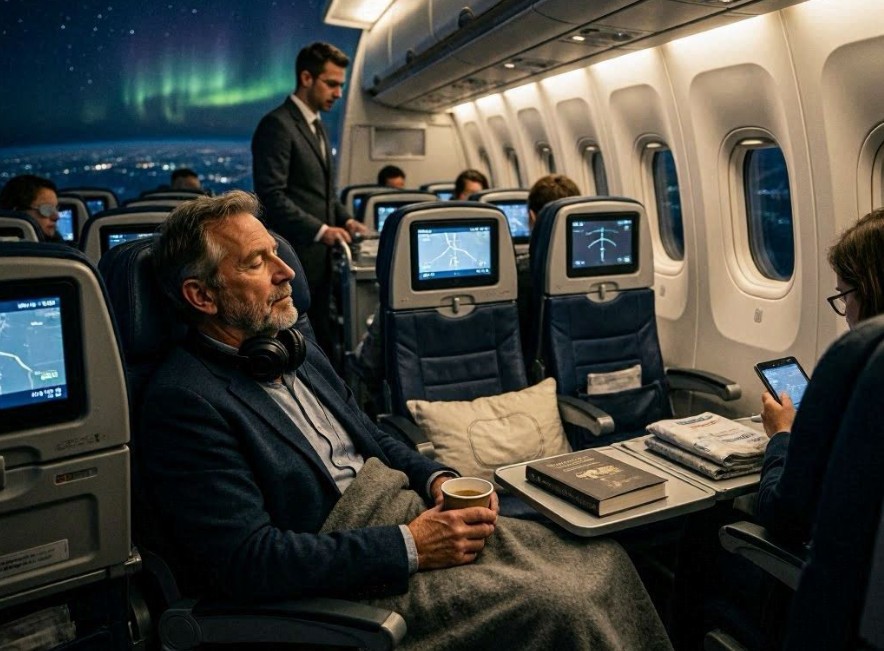
Long-haul flights place the human body in an unnatural static position for extended periods. Limited movement, reduced cabin humidity, and prolonged sitting all contribute to muscle stiffness and poor circulation.
The most common complaints after long flights include lower back pain, neck tension, swollen ankles, and general fatigue. These issues are not just discomfort—they are physiological responses to immobility and reduced blood flow.
Regular movement and targeted stretching can significantly reduce these effects, even in the constrained environment of an aircraft seat.
What happens to your body during long flights
When you sit for long periods, especially with limited leg movement, blood circulation slows down. This can lead to fluid retention in the lower extremities and increased pressure in the lumbar spine.
Additionally, the forward-leaning posture common in airplane seats tightens the hip flexors and chest muscles while weakening postural stabilizers in the back.
Understanding these mechanisms helps explain why specific stretches are more effective than general movement alone.
Seated stretches you can do without leaving your seat
Neck release stretch
Gently tilt your head toward one shoulder, holding for 10–15 seconds, then switch sides. This helps release tension in the upper trapezius muscles, which often tighten due to forward head posture.
Shoulder rolls
Roll your shoulders forward and backward in slow circular motions. This improves blood flow in the upper back and reduces stiffness from prolonged stillness.
Seated spinal twist
Place one hand on the opposite knee and gently rotate your torso. This stretch helps mobilize the spine and reduce lower back stiffness.
Ankle circles
Lift your feet slightly off the floor and rotate your ankles in circular motions. This supports circulation and reduces the risk of swelling.
Lower body circulation exercises
The lower body is most affected by long periods of sitting. Simple movements can help maintain healthy blood flow.
Heel-to-toe rocking
Alternate between lifting your heels and toes while keeping your feet on the floor. This activates the calf muscles, which act as a natural pump for blood circulation.
Knee lifts
Slowly lift one knee at a time toward your chest if space allows. This engages hip flexors and improves joint mobility.
Aisle-friendly stretches when it is safe to move
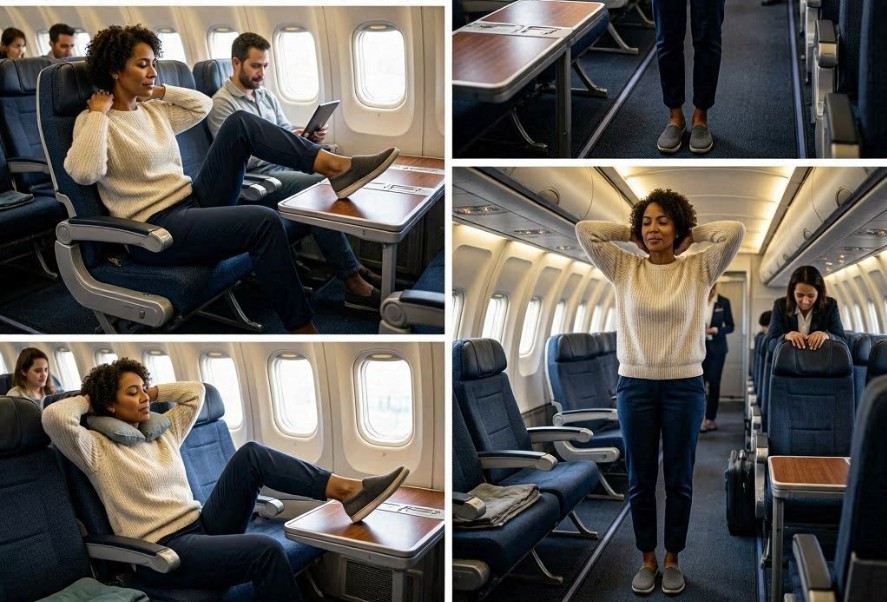
When the seatbelt sign is off and it is safe to stand, more effective stretches can be performed in the aisle or near your seat.
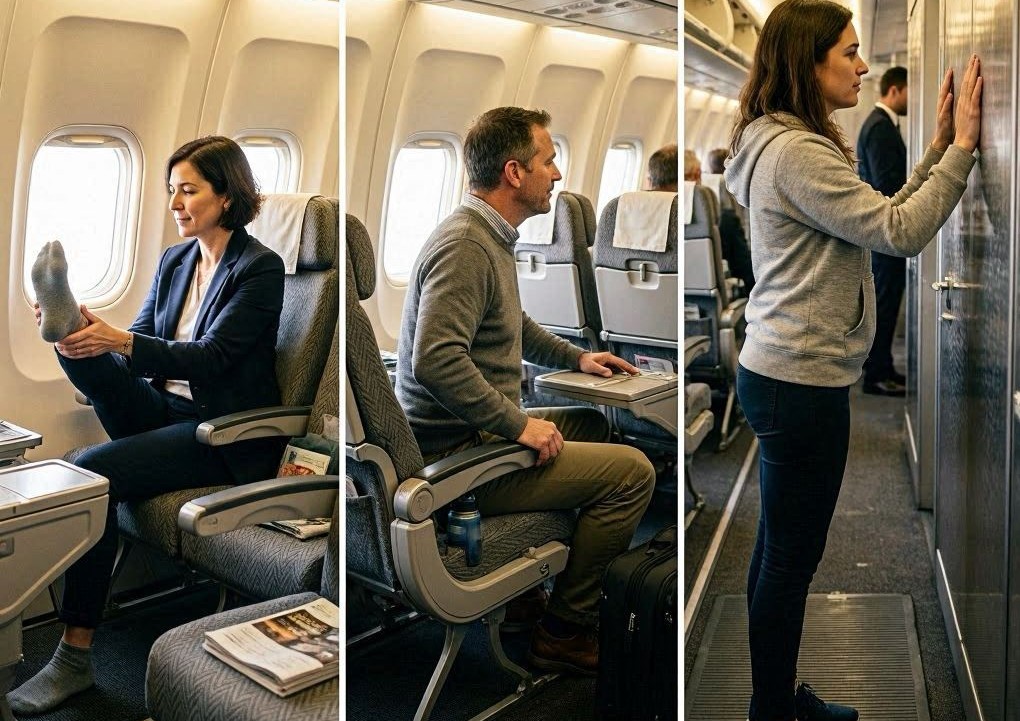
Standing calf stretch
Place your hands on the seat in front of you and step one leg back, pressing the heel into the floor. This stretches the calf muscles and improves circulation in the lower legs.
Forward fold
Gently bend forward at the hips and let your upper body hang loosely. This helps decompress the spine and release tension in the lower back.
Side reach stretch
Raise one arm overhead and lean gently to the opposite side. This opens the ribcage and relieves tension in the torso.
Breathing as a mobility tool
Breathing deeply is often overlooked during flights. However, diaphragmatic breathing helps reduce muscle tension and improve oxygen exchange in a low-humidity cabin environment.
Slow inhalations through the nose followed by controlled exhalations help activate the parasympathetic nervous system, reducing overall stress and physical tightness.
How often should you stretch during a flight
On long-haul flights, a good guideline is to move or stretch every 30 to 60 minutes. This does not require full exercise—small, consistent movements are sufficient to maintain circulation and reduce stiffness.
Even brief activity breaks can significantly reduce post-flight soreness and fatigue.
Common mistakes passengers make
Staying completely still
Remaining motionless for hours is the most common cause of discomfort. Even minimal movement is better than none.
Overstretching in tight spaces
Forcing deep stretches in a confined seat can cause strain. Movements should be gentle and controlled.
Ignoring hydration
Dehydration increases muscle tightness and fatigue. Stretching is most effective when combined with adequate water intake.
Who benefits most from in-flight stretching
While all passengers benefit from movement, certain groups are especially at risk of stiffness and circulation issues:
- Passengers on flights longer than 6 hours
- People with pre-existing back or joint issues
- Older travelers with reduced mobility
- Passengers prone to swelling or circulation problems
Conclusion: movement is essential, not optional
Long flights are an unavoidable part of modern travel, but their physical impact can be significantly reduced through simple stretching routines.
By combining seated movements, occasional standing stretches, and controlled breathing, passengers can maintain circulation, reduce discomfort, and arrive at their destination with a healthier, more balanced body.
