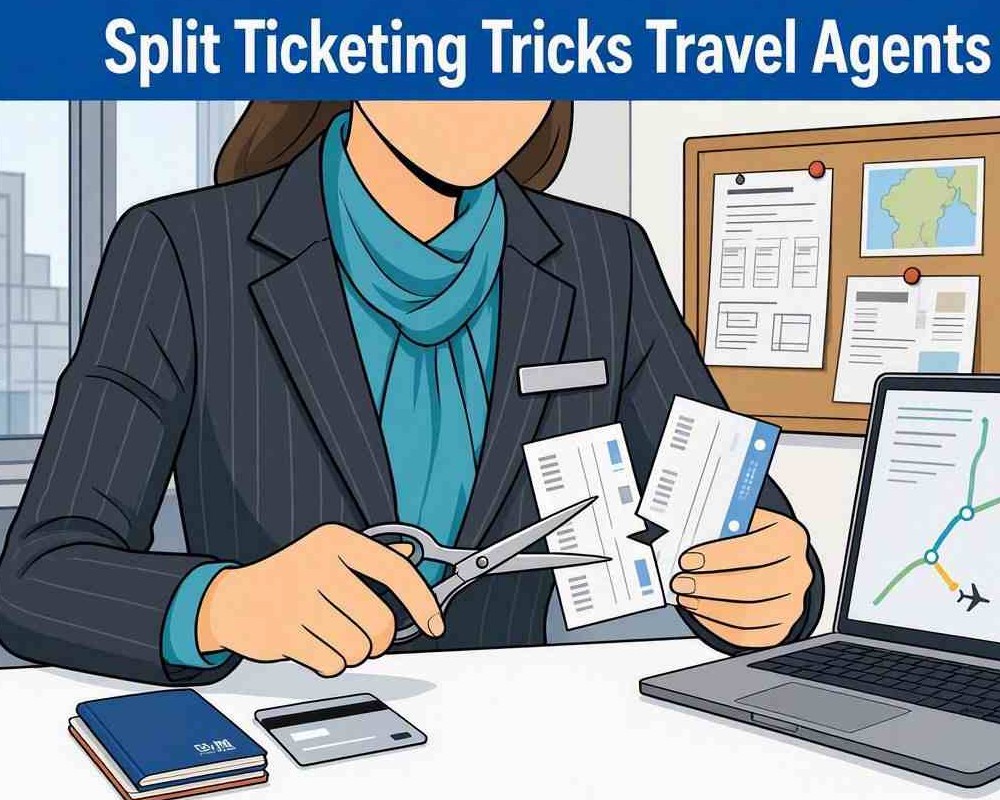
Split ticketing means dividing one journey into two or more separate reservations instead of purchasing a single through-ticket. Skilled travel agents use this method to uncover combinations that ordinary booking engines may overlook. The result can be a lower fare, a more convenient schedule, or access to carriers that do not sell tickets together. However, the strategy also transfers certain risks to the traveler, so every saving must be weighed against connection security, baggage rules, and change conditions.
Why Splitting a Journey Can Reduce the Price
Airlines and rail operators do not calculate fares strictly by distance. Prices depend on demand, competition, booking class, sales regions, and inventory allocated to individual routes. A direct ticket from the origin to the final destination may therefore cost more than separate tickets covering the same path.
Breaking the Route at a Competitive Hub
Agents often test major hubs as artificial break points. For example, they may price a flight from the departure city to a busy gateway and then book a second airline from that gateway onward. Strong competition on both segments can produce a lower combined fare. This technique is especially useful when regional airlines, low-cost carriers, and international networks serve the same airport but lack an interline agreement.
Combining Return and One-Way Fares
A conventional round trip is not always the cheapest option. An agent may compare a return fare with two one-way tickets, each issued by a different carrier. Another variation combines a discounted return ticket for the long-haul portion with separate positioning flights. Careful agents compare the total cost after adding seat selection, baggage, payment fees, and airport transfers.
Advanced Split Ticketing Techniques
Using Nearby Airports and Surface Sectors
Fare differences between airports in the same region can be substantial. Travel agents search alternate departure and arrival points, then connect them by train, bus, or rental car. This is known as adding a surface sector. The method can work well in areas with reliable ground transport, but transfer time and transport costs must be included in the calculation.
Separating Domestic and International Segments
Some agents price domestic feeder flights independently from international services. A local promotion may undercut the feeder segment included in a global itinerary. Conversely, an international ticket may be cheaper when it begins in a neighboring country. This approach can create savings, although entering another country may introduce visa, tax, or entry requirements.
Checking Tickets in Different Markets
Currency, point of sale, and regional promotions can affect published fares. Professional agents may compare authorized booking channels in different markets while respecting airline rules and consumer laws. A lower displayed price is not automatically a genuine saving because foreign transaction charges, limited customer support, and restrictive payment requirements can eliminate the advantage.
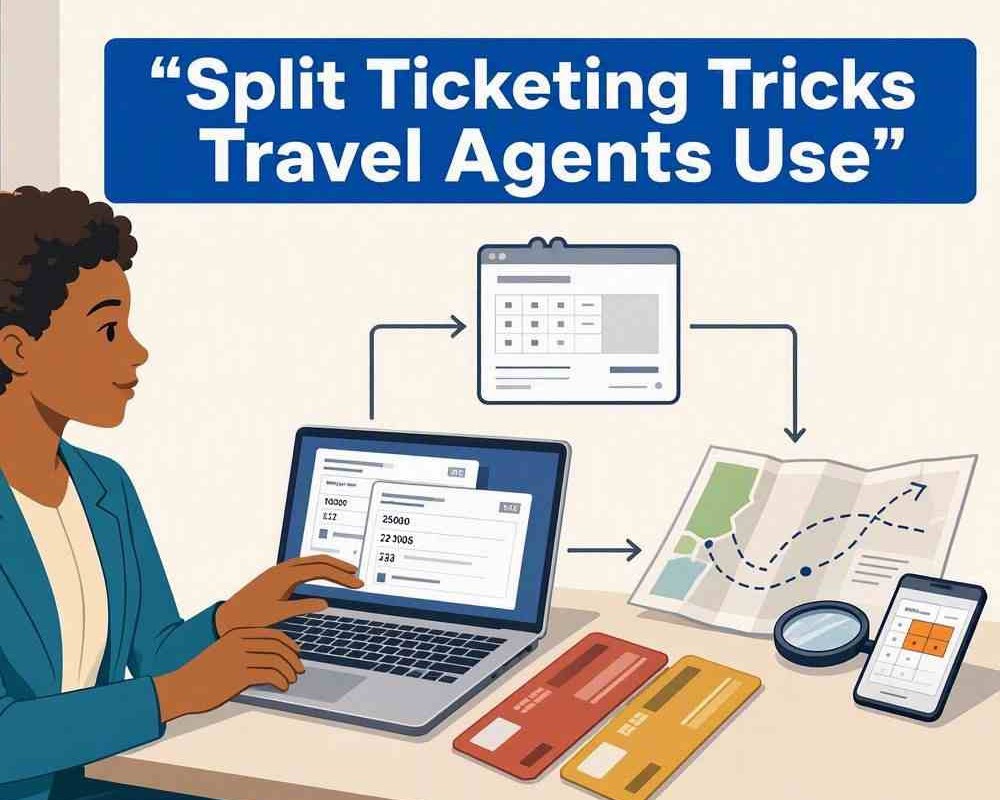
How Agents Control Split Ticketing Risks
The central weakness of separate tickets is that the second carrier usually has no obligation to help when the first service is delayed. Travel agents reduce this exposure through practical safeguards:
- Allowing a generous connection window, particularly at congested airports.
- Scheduling an overnight stop before an expensive long-haul departure.
- Checking whether baggage must be collected and checked in again.
- Confirming terminal changes, immigration procedures, and transit visas.
- Choosing flexible fares when disruption would create a major loss.
- Reviewing travel insurance coverage for missed connections on separate tickets.
Protecting Checked Baggage
Even when two airlines cooperate, staff may refuse to tag baggage through on separately issued tickets. Travelers might need to enter the country, reclaim their bags, pass customs, and repeat check-in and security. Agents verify minimum check-in deadlines rather than relying only on the scheduled gap between flights.
Avoiding Hidden-City Problems
Hidden-city ticketing is sometimes confused with legitimate split ticketing. It involves leaving an itinerary at a connection point and intentionally missing the final segment. Airlines commonly prohibit this practice, and later flights on the reservation may be canceled. Responsible agents focus on separately ticketed journeys that travelers genuinely intend to complete.
When Split Ticketing Is Worthwhile
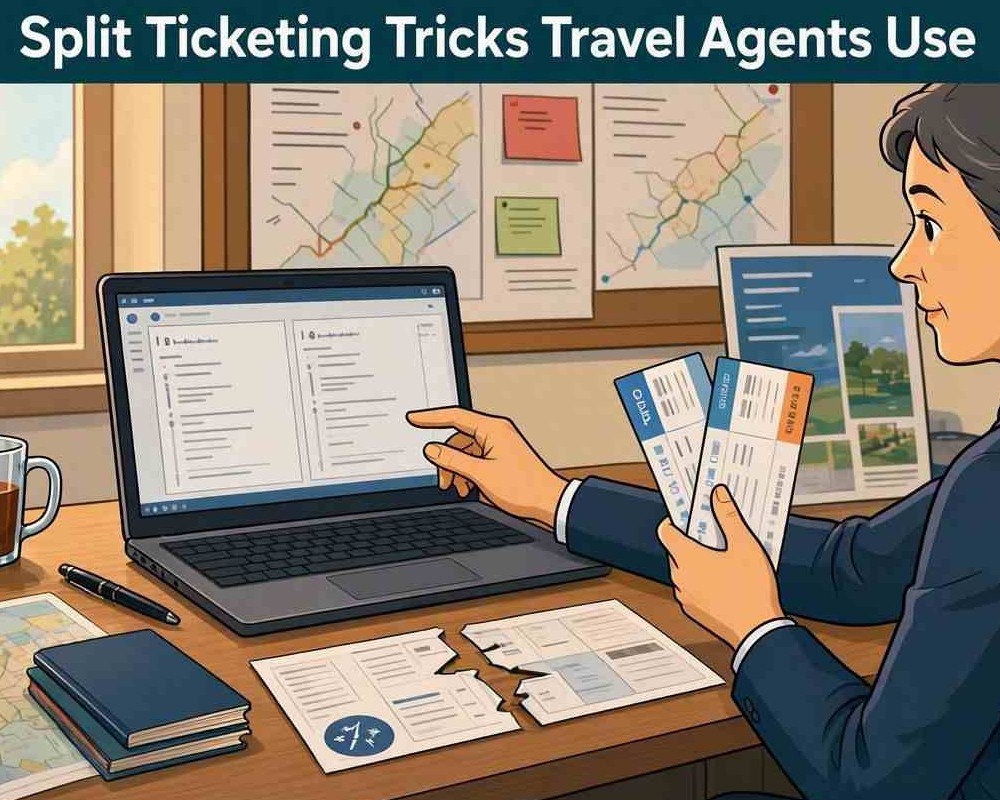
The technique is most attractive when the saving is meaningful, schedules are stable, and the traveler can tolerate a longer transfer. It is less suitable for time-sensitive business trips, travelers requiring assistance, or connections involving infrequent services. The best agents present both the lower price and the operational consequences.
Before booking, compare the complete itinerary rather than the headline fare. Include baggage, seats, ground transport, accommodation, insurance, and the financial impact of a missed connection. Split ticketing is not simply a discount trick - it is a route-design strategy that works best when supported by accurate research and realistic contingency planning.
