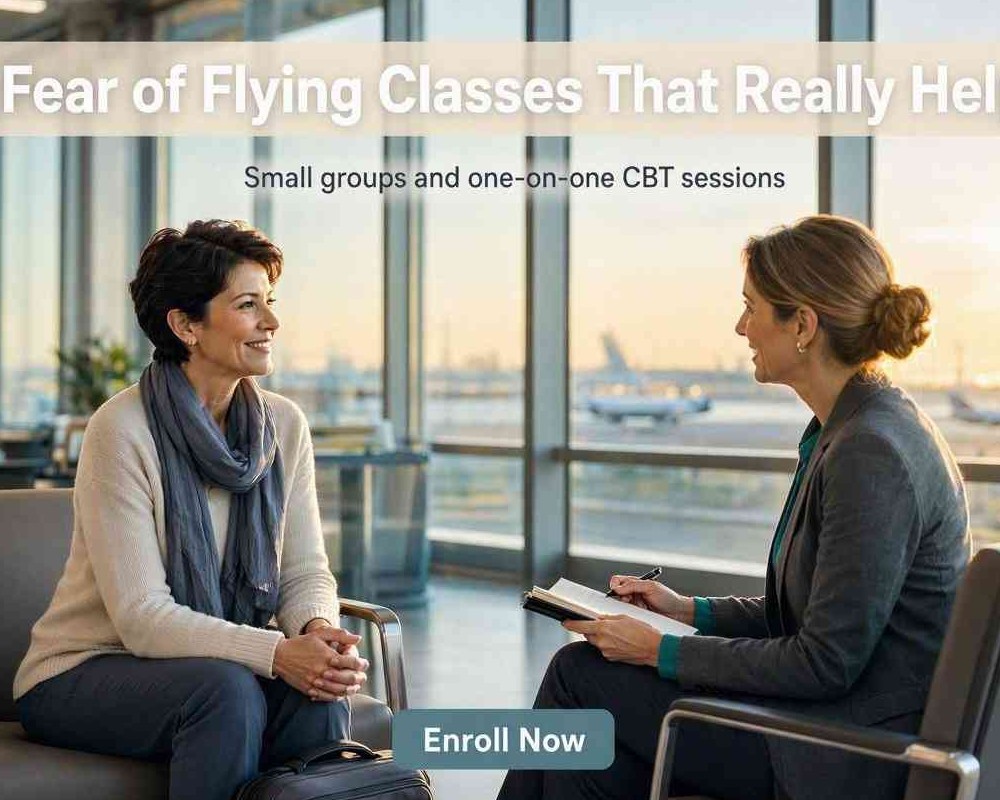
Fear of flying can turn a routine journey into weeks of worry, sleepless nights, or complete avoidance. Effective fear of flying classes do more than offer reassurance. They teach participants why anxiety occurs, explain how aircraft operate, and provide practical tools for managing distress before and during a flight. The best program depends on the severity of the fear, its underlying triggers, and the level of professional support required.
What Makes a Fear of Flying Class Effective?
A useful course combines psychological methods with accurate aviation information. Learning that turbulence is uncomfortable rather than inherently dangerous may reduce uncertainty, but facts alone rarely resolve a strong phobia. Participants also need to understand the cycle of anxious thoughts, physical sensations, avoidance, and short-term relief that keeps fear active.
Strong programs are structured, led by qualified professionals, and designed around gradual practice. They do not promise to eliminate every uncomfortable feeling. Instead, they help people tolerate anxiety, challenge catastrophic predictions, and continue with the journey even when nervousness appears.
Cognitive Behavioral Therapy
Cognitive behavioral therapy, commonly called CBT, is one of the most established approaches for specific phobias. In a flying course, CBT may help participants identify thoughts such as "turbulence means the plane is falling" or "a panic attack will make me lose control." The instructor then teaches ways to examine those beliefs and replace them with realistic interpretations.
Gradual Exposure Practice
Exposure allows the nervous system to learn that feared situations can be faced safely. A class may begin with photographs, airport sounds, flight videos, or aircraft simulations. Later stages can include visiting an airport, sitting inside a stationary plane, or taking a supervised flight. Progress should be planned and challenging without becoming overwhelming.
Education From Aviation Professionals
Courses involving pilots, engineers, or cabin crew can clarify unfamiliar noises, takeoff sensations, weather procedures, and turbulence. This access is especially valuable for people whose anxiety is driven by uncertainty. Aviation education works best when it supports psychological training rather than replacing it.
Types of Fear of Flying Classes
Airline-Based Group Courses
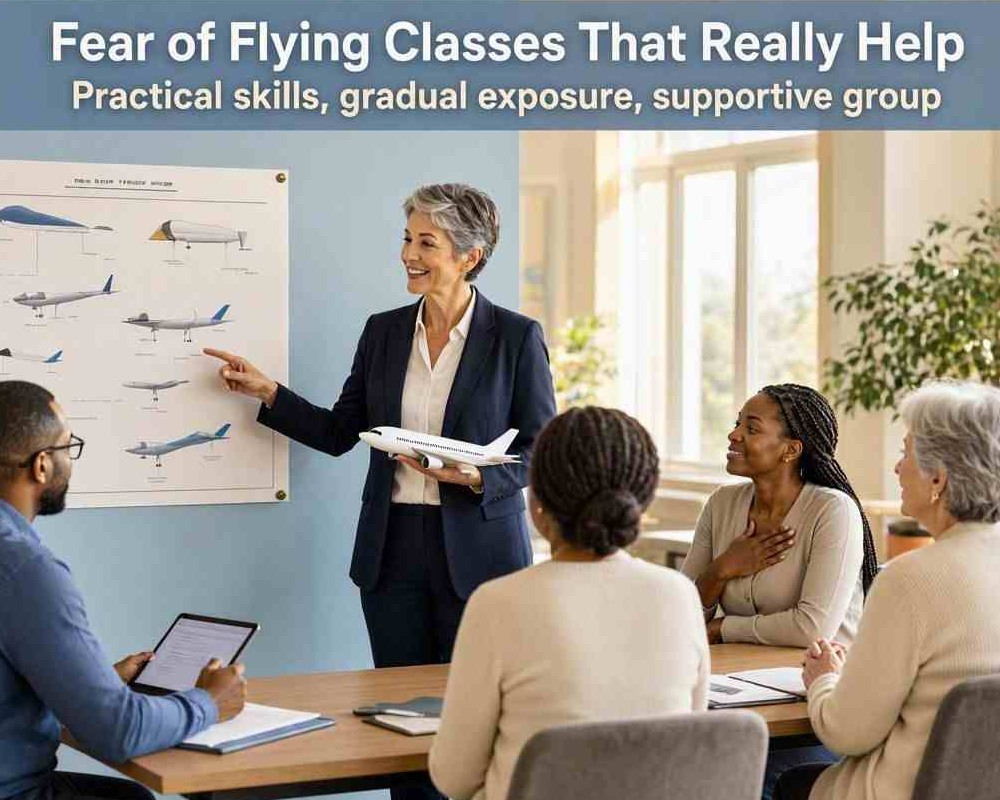
Some airlines offer one-day or weekend programs that combine presentations, anxiety-management exercises, and an optional short flight. These courses provide realistic exposure and direct access to flight professionals. The group setting also shows participants that their fear is common. Before booking, check whether a licensed mental health professional is involved and whether follow-up support is available.
Therapist-Led Individual Programs
One-to-one treatment may be more suitable for severe panic, trauma, claustrophobia, health anxiety, or previous distressing flight experiences. A therapist can adjust the pace and address related concerns that a standard group course may not cover. Individual programs are often more expensive, but they provide greater privacy and personalization.
Online Courses and Virtual Reality
Online classes can be convenient for people without access to an in-person program. Quality options include structured lessons, guided exercises, progress tracking, and contact with a qualified instructor. Virtual reality may add controlled exposure to boarding, takeoff, turbulence, and landing. However, an online course should eventually connect learning with real-world practice.
How to Choose the Right Course
Course quality varies, so review the provider rather than relying on dramatic testimonials. Look for clear information about methods, instructor credentials, safety procedures, and what happens if a participant becomes distressed.
- Choose programs that use CBT, exposure, or another evidence-based psychological approach.
- Confirm that mental health instructors hold relevant professional qualifications.
- Ask whether aviation experts actively participate in the course.
- Check if the final flight is optional and appropriately supported.
- Look for follow-up sessions, recordings, or written practice plans.
- Avoid providers that guarantee a permanent cure in a few hours.
Getting More Value From the Class
Prepare by recording your specific triggers. These might include turbulence, enclosed spaces, lack of control, mechanical failure, or physical symptoms of panic. Clear triggers help an instructor recommend targeted exercises. During the course, practice techniques repeatedly rather than waiting until the next flight.
- Complete assigned exposure exercises at a manageable pace.
- Use breathing as a calming aid, not as a way to suppress every sensation.
- Reduce excessive checking of weather reports and aviation news.
- Schedule a realistic flight soon after completing the program.
- Review your progress based on actions taken, not perfect calmness.
When Additional Support Is Needed
A class may not be enough when flying anxiety is linked to trauma, frequent panic attacks, depression, substance use, or broader agoraphobia. In these cases, consult a licensed mental health professional before attempting intensive exposure. Medication questions should be discussed with a physician, since sedatives can affect alertness and may interfere with therapeutic learning.
The Most Helpful Outcome
The goal of a good fear of flying class is not to make every passenger love aviation. It is to restore choice. A successful participant may still notice tension during takeoff or turbulence but can understand the sensations, use practical skills, and remain on the flight. Programs that combine evidence-based therapy, aviation knowledge, gradual exposure, and follow-up practice offer the strongest foundation for lasting improvement.
