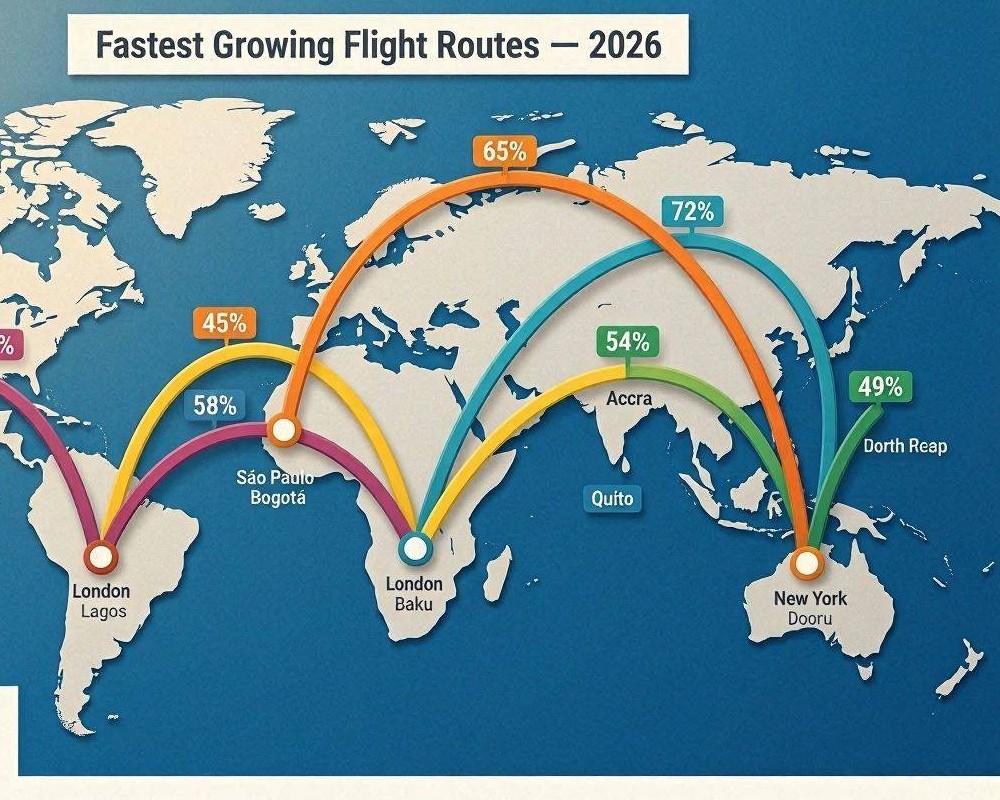
Flight routes do not grow by chance. They expand when business shifts, tourism rebounds, regional airlines add capacity, and travelers find better schedules. This year, several city pairs and travel corridors are standing out for their momentum. Below, you will find a practical, expert view of what is driving growth, which routes are gaining attention, and how to use that information when planning your next trip.
Why some flight routes grow faster than others
The fastest growing routes typically share a set of measurable signals. Airlines follow profit, but they also respond to demand patterns that show up in booking curves, load factors, and route economics.
Key drivers behind route expansion
-
Improving connectivity - more frequencies, better departure times, and fewer long layovers.
-
Lower effective cost - competitive fares, loyalty redemptions, and seasonal discounts.
-
New aircraft and schedule optimization - capacity that matches demand rather than oversupplying it.
-
Tourism rebound and visa facilitation - easing travel logistics increases steady leisure demand.
-
Corporate travel recovery - business hubs see renewed movement and repeat travel patterns.
When these factors align, routes move from “new service” to “repeat demand,” which is why growth can accelerate within a single year.
Fastest growing flight routes to watch this year
Route growth varies by region, but global themes repeat: strong domestic markets, high-demand leisure corridors, and intercontinental links that bridge major hubs. The examples below are representative of the most discussed growth patterns across aviation markets.
1) Regional hubs to major tourism gateways
Many fast-growing corridors connect secondary cities to high-volume destinations. Instead of forcing travelers to go through only one mega-hub, airlines are offering more direct options.
-
Within Europe - increased point-to-point service between mid-sized capitals and popular Mediterranean gateways.
-
Across North America - growing frequency on leisure-heavy routes that support weekend travel.
These routes often grow because leisure travelers value convenience over price, especially when schedules are timed for short stays.

2) Secondary business cities to global financial hubs
Business travel tends to cluster around reliable connections. When carriers improve frequency between a regional business center and a global financial hub, demand frequently rises quickly.
-
Frequent short-haul segments feeding long-haul networks.
-
Schedules that reduce missed connections for same-day meetings.
This type of growth is visible when flights show consistently high load factors and airlines add additional weekly rotations.
3) Emerging market corridors with rising middle-class travel
Certain routes benefit from expanding travel affordability and a broader base of frequent travelers. Airlines introduce service, test demand, then scale up as bookings stabilize.
Look for routes where capacity increases gradually rather than abruptly. That usually indicates healthier economics and sustained growth.
How to spot whether a route will keep growing
You do not need access to airline internal data to make a reasonable forecast. Use traveler-facing signals and schedule behavior.
Practical indicators
-
Route frequency increases - from a few weekly flights to multiple departures.
-
Seat availability tightens - fewer “cheap seats” as demand rises.
-
More ticketing options - expanded fare families and better refund rules often follow growth.
-
Better layover alignment - shorter connections through the same hub city.
-
Consistent seasonal performance - if the route holds up after peak holidays, it is likely more than a one-time trend.
If several indicators appear together, the route is more likely to remain competitive and frequently operated rather than being reduced later.

Booking strategy for fast-growing routes
Fast growth is good for choice, but it can also mean higher prices as airlines fill more seats. The goal is to book with timing discipline.
When to book and when to be flexible
-
Book earlier for peak travel windows - holidays and major events can push fares up quickly.
-
Watch fare changes - small fluctuations can become steep once the flight reaches consistent capacity.
-
Consider alternate airports nearby - fast-growing corridors sometimes extend to adjacent cities with better availability.
-
Use schedule flexibility - shifting by one or two days can unlock different aircraft rotation cycles.
If you see a new route with only a couple of weekly flights, treat it as an opportunity, not a guarantee. Early demand can make those flights popular, so earlier booking is often safer.
What these route trends mean for travelers
Route growth usually improves your options: more departures, better connections, and competitive pressure that can help prices. It also reduces dependency on a single mega-hub, which can lower travel time and stress.
Benefits you are likely to notice this year
-
More direct choices for weekend and business itineraries.
-
Improved timetable alignment for same-day or short-stay travel.
-
Greater competition among carriers on high-demand corridors.
-
Higher probability of seamless onward travel through better-connected hubs.
In a year when aviation capacity is shifting to meet evolving demand, the fastest growing routes are more than headline news. They are the clearest map of where airlines see demand continuing, and where travelers can often find the best mix of convenience and value.
Use the indicators above to track route momentum, then apply smart booking timing to secure seats before capacity tightens. That is how you turn fast growth into a better trip.
