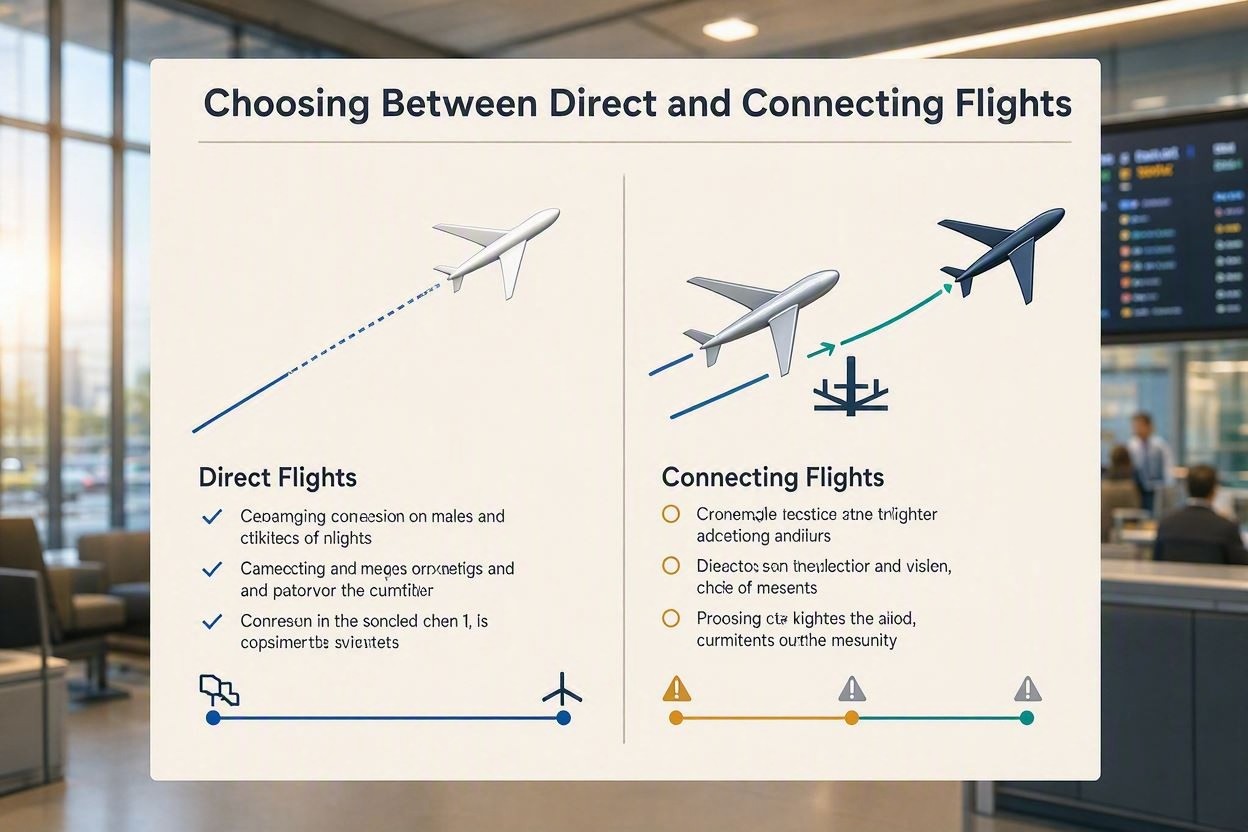
Choosing between a direct flight and a connecting flight is not always as simple as picking the shortest route or the lowest fare. The better option depends on your budget, schedule, destination, luggage, travel experience, and tolerance for risk. A business traveler trying to arrive fresh for a morning meeting may value speed and reliability, while a leisure traveler may accept a longer journey to save money. Understanding the real trade-offs helps you book smarter and avoid unpleasant surprises at the airport.
What Is the Difference?
Direct flights are not always nonstop
A nonstop flight takes you from your departure airport to your destination without landing anywhere in between. A direct flight may include a stop, but you usually stay on the same aircraft or keep the same flight number. In everyday travel language, many people use "direct" to mean nonstop, but airlines and booking platforms may treat these terms differently. Always check the full itinerary before buying.
Connecting flights require a transfer
A connecting flight involves at least two separate flight segments. You land at an intermediate airport, leave the aircraft, and board another plane to continue your trip. Sometimes both flights are operated by the same airline; sometimes they are handled by partner airlines. Connections can be smooth and efficient, but they also introduce more variables, including delays, terminal changes, security checks, and baggage transfer issues.
When a Direct Flight Makes More Sense
A direct or nonstop flight is often the best choice when time, comfort, and predictability matter most. It reduces the number of moving parts in your journey and usually lowers the chance of missed connections or lost luggage.
Choose direct for tight schedules
If you need to arrive by a specific time, especially for a wedding, cruise departure, conference, medical appointment, or business meeting, a direct flight is usually worth the higher price. Even a short delay on the first leg of a connecting itinerary can disrupt the entire trip.
Choose direct for easier travel days
Direct flights are especially helpful for families with children, elderly travelers, people with reduced mobility, nervous flyers, and anyone carrying special equipment. Avoiding an airport transfer can make the journey significantly less stressful.
- Fewer boarding processes
- Lower risk of missed connections
- Less walking between gates or terminals
- Reduced chance of baggage mishandling
- Shorter total travel time in most cases
When a Connecting Flight Can Be Better
Connecting flights are not automatically inferior. In many cases, they offer better prices, more departure times, and access to destinations that do not have nonstop service from your home airport. For flexible travelers, a well-planned connection can be a smart way to stretch a travel budget.
Choose connections to save money
Airlines price tickets according to demand, competition, route popularity, and timing. A connecting itinerary may cost much less than a nonstop flight, particularly on long-haul international routes. If the fare difference is large enough, the extra travel time may be acceptable.
Choose connections for more route options
Smaller cities often have limited nonstop service. Connecting through a major hub can open up more destinations and better schedules. This is especially useful when traveling to remote islands, regional airports, or secondary cities in another country.
Key Factors to Compare Before Booking
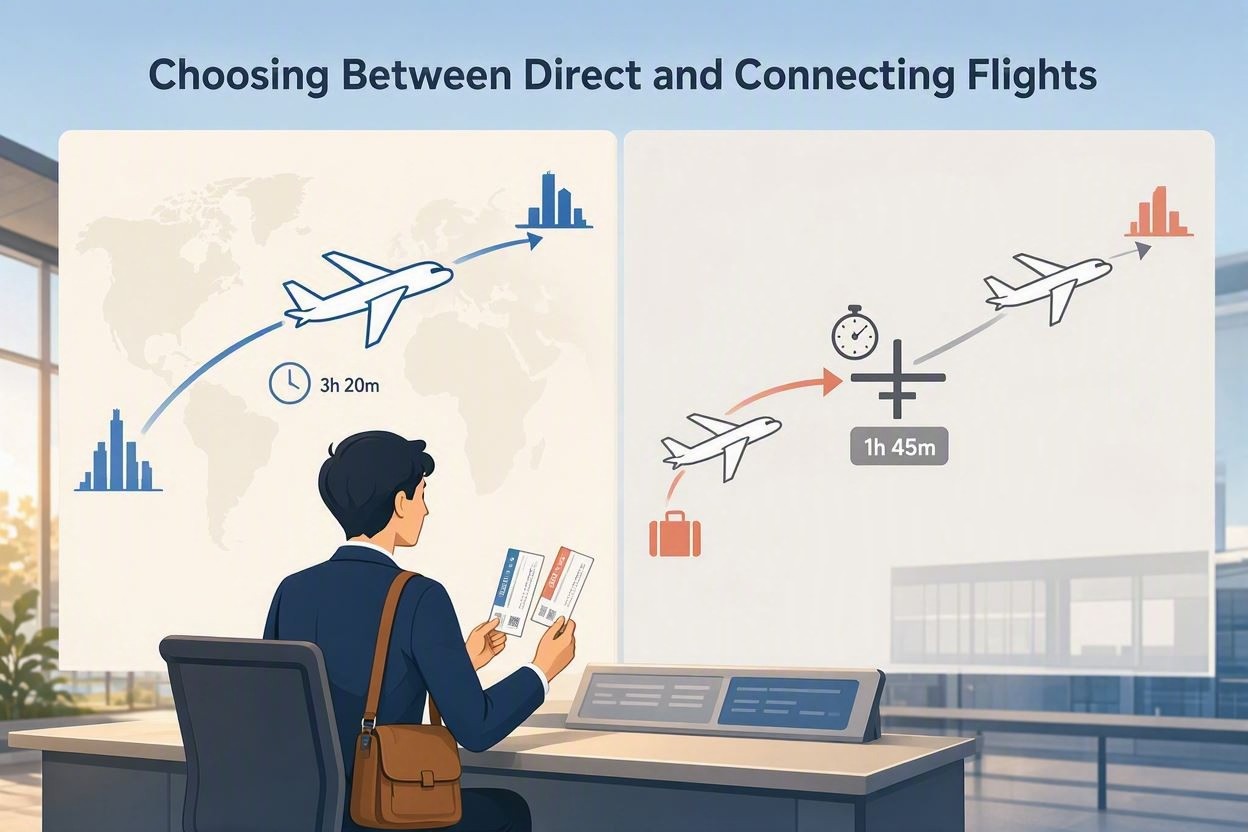
Total travel time
Do not compare flights by airtime alone. Look at the full door-to-door schedule, including layover length, arrival time, airport transfer time, and potential fatigue. A cheaper ticket may not be a bargain if it turns a manageable travel day into a 20-hour ordeal.
Connection time
A connection that looks legal in an airline system may still feel risky in real life. Large airports, international arrivals, passport control, security screening, and terminal changes can require more time than expected. As a general rule, allow more buffer for international connections, winter travel, peak holiday periods, and airports known for congestion.
Baggage rules
If all flights are on one ticket, checked baggage is usually transferred to the final destination, although customs rules may require you to collect and recheck it in some countries. If you book separate tickets, baggage transfer is rarely guaranteed. You may need to exit, collect bags, check in again, and pass security a second time.
Delay protection
One-ticket connections provide more protection if your first flight is delayed. The airline normally has responsibility to rebook you on the next available option. With separate tickets, you carry the risk. If you miss the second flight, the next airline may treat you as a no-show and require a new ticket.
How to Make a Smart Decision
Use a practical decision process instead of choosing only by price. The cheapest itinerary is not always the best value, and the fastest itinerary is not always necessary.
- Compare the total trip duration, not just flight time.
- Check whether the itinerary is on one ticket or separate tickets.
- Review layover length and airport layout.
- Consider who is traveling and how much stress they can tolerate.
- Calculate the real cost of delays, meals, hotel stays, or missed events.
- Read baggage rules carefully before paying.
Expert Booking Tips
For business travel
Choose nonstop whenever possible, especially for same-day meetings or trips with fixed arrival deadlines. If a connection is unavoidable, book an earlier flight than you think you need and avoid the last connection of the day.
For leisure travel
If your dates are flexible, compare nearby airports, midweek departures, and longer but comfortable layovers. A connection can be worthwhile if the savings can be used for hotels, meals, upgrades, or experiences at your destination.
For international trips
Allow generous connection time. Immigration lines, security checks, and long walks between terminals can be unpredictable. When possible, avoid complicated self-transfer itineraries unless you have plenty of time and travel light.
Final Verdict
Direct flights are best when convenience, speed, and reliability are your top priorities. Connecting flights are better when price, availability, or route flexibility matters more. The right choice is the one that balances money, time, comfort, and risk for your specific trip. Before booking, look beyond the headline fare and study the complete itinerary. A few extra minutes of planning can prevent missed flights, lost bags, and unnecessary stress.
