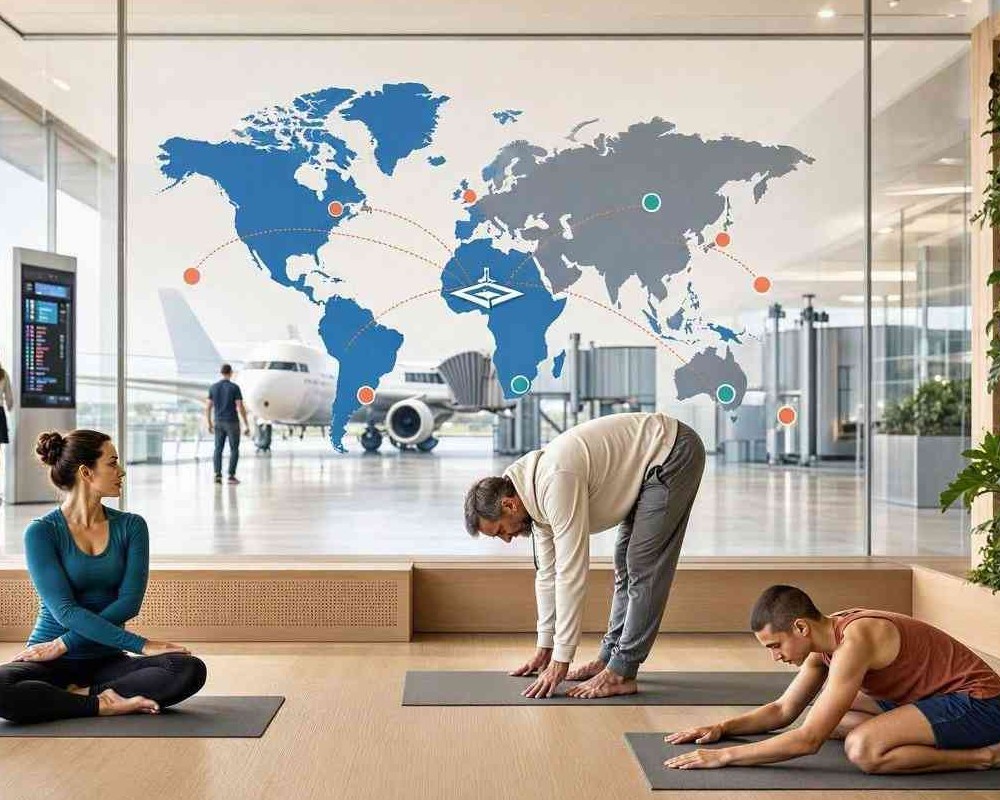
Airports are no longer designed only for check-in, security, shopping, and boarding. As passenger expectations change, terminals are adding services that support physical and mental well-being. One of the most notable developments is the rise of airport yoga rooms. These quiet spaces give travelers an opportunity to stretch, meditate, and recover from the strain of flying without leaving the terminal.
The trend began as a niche experiment but has gained international attention. Major hubs in North America, Europe, and Asia have introduced dedicated yoga studios, meditation areas, or multipurpose wellness rooms. Although facilities differ by airport, the goal is consistent: to make long journeys less stressful and more comfortable.
Why Airports Are Investing in Wellness
Modern air travel can involve extended waiting periods, crowded gates, disrupted sleep, and hours of sitting in confined seats. These conditions may contribute to stiffness, fatigue, and anxiety. A yoga room offers a practical alternative to spending a layover in a restaurant or walking repeatedly through retail areas.
Wellness facilities can also improve the overall passenger experience. Airports compete for airline routes, connecting traffic, and customer satisfaction ratings. A clean, accessible yoga space is a relatively compact amenity that can distinguish one terminal from another while serving passengers of different ages and travel classes.
Benefits for Connecting Passengers
Travelers with long connections often have enough time to exercise but cannot access a hotel or fitness center. Gentle movement may help loosen the hips, shoulders, neck, and lower back after a flight. Breathing exercises can also create a sense of calm before the next departure.
Yoga rooms are particularly useful on long-haul itineraries that cross several time zones. They cannot eliminate jet lag, but light activity and relaxation may help passengers manage restlessness and regain focus. Travelers should still stay hydrated, walk regularly, and follow medical advice regarding circulation risks.
What Travelers Can Expect Inside
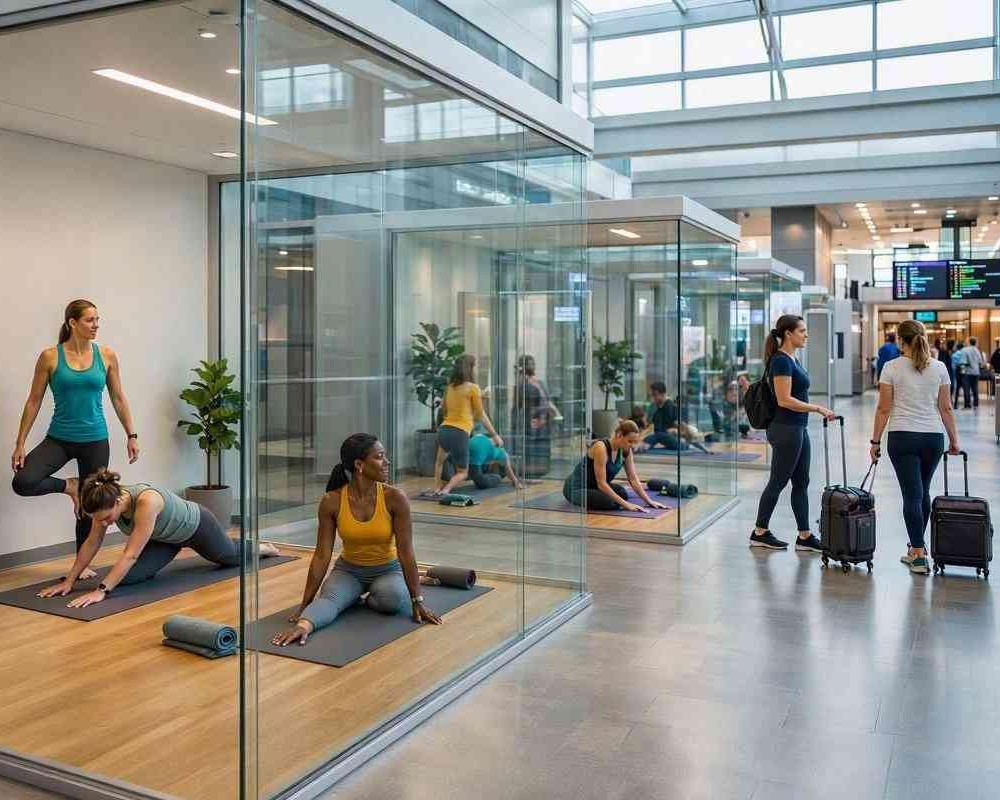
Airport yoga spaces are generally simpler than commercial studios. Many provide exercise mats, mirrors, soft lighting, and instructional posters or videos. Some combine yoga with prayer, meditation, or general relaxation, while others are reserved specifically for quiet stretching. Access is often free and available without advance booking.
Common Features of Airport Yoga Rooms
- Yoga mats or padded flooring for stretching
- Calm lighting and reduced terminal noise
- Guided routines displayed on a screen
- Space for meditation and breathing exercises
- Nearby changing rooms, showers, or restrooms at selected airports
Opening hours and equipment can change, especially during terminal renovations. Before traveling, passengers should check the airport website or official mobile app. Information desks can also confirm whether a wellness room is open and whether it is located before or after security.
Airports Helping the Trend Expand
San Francisco International Airport is widely recognized for opening one of the first dedicated airport yoga rooms in 2012. Its initiative demonstrated that travelers would use a quiet, free wellness space inside a busy terminal. Other airports, including Dallas Fort Worth, Chicago O'Hare, and Frankfurt, have offered yoga or exercise facilities in various forms.
The international expansion is not limited to permanent studios. Some airports test temporary wellness zones, host instructor-led sessions, or integrate stretching areas into lounges. Larger hubs may provide several options, while regional airports often create a single multipurpose room. Availability can vary by terminal and season.
How to Use an Airport Yoga Room Responsibly
Prepare for a Short Session
A useful airport routine does not need to be intense. Ten to twenty minutes of gentle poses, controlled breathing, and simple mobility work may be enough. Comfortable travel clothing usually works well, but shoes should be removed if required. Passengers should avoid difficult poses when tired or unfamiliar with yoga.
Respect Shared-Space Etiquette
Phones should remain silent, conversations should be brief, and equipment should be cleaned after use. Personal belongings must not block entrances or take up excessive space. Strong fragrances and loud audio are best avoided because many visitors enter the room specifically to escape terminal stimulation.
A More Human Approach to Air Travel
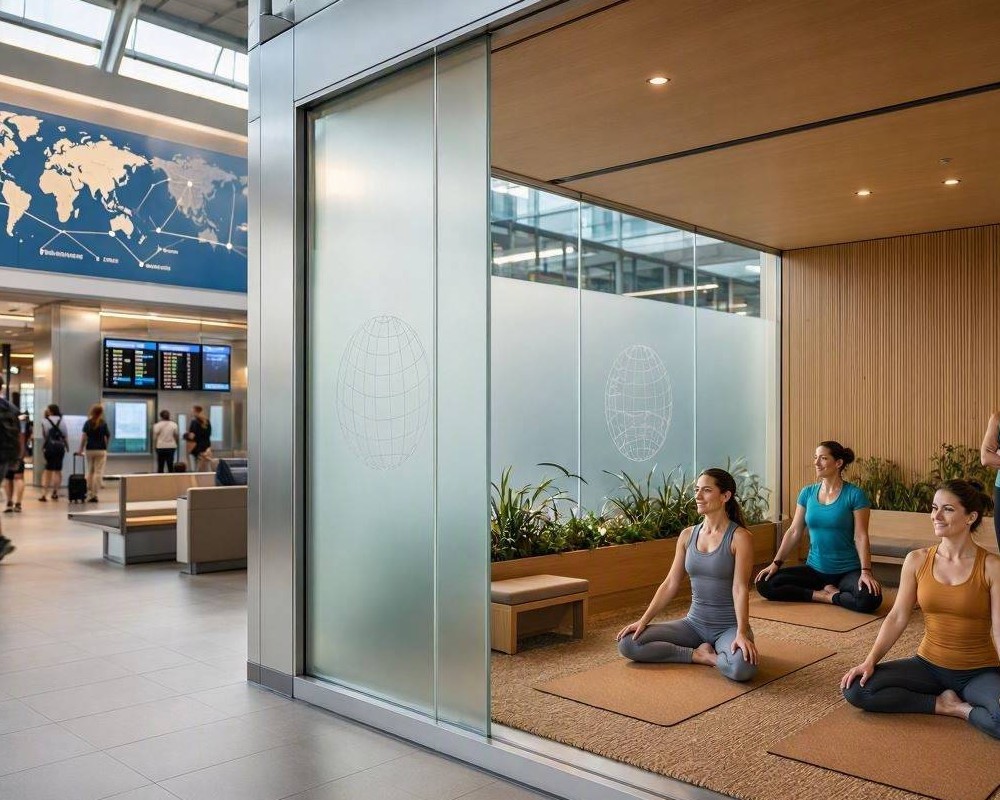
The spread of airport yoga rooms reflects a broader shift toward healthier, passenger-centered terminals. Sleep pods, walking routes, indoor gardens, and meditation rooms are appearing for the same reason: travelers value comfort as well as efficiency. Yoga facilities will not remove every inconvenience of flying, but they can transform an idle layover into a restorative break.
As airports continue to modernize, wellness spaces are likely to become more common and more sophisticated. For passengers, the best strategy is simple: check available facilities before departure, allow enough time to reach the gate, and use the room for calm movement rather than a strenuous workout.
