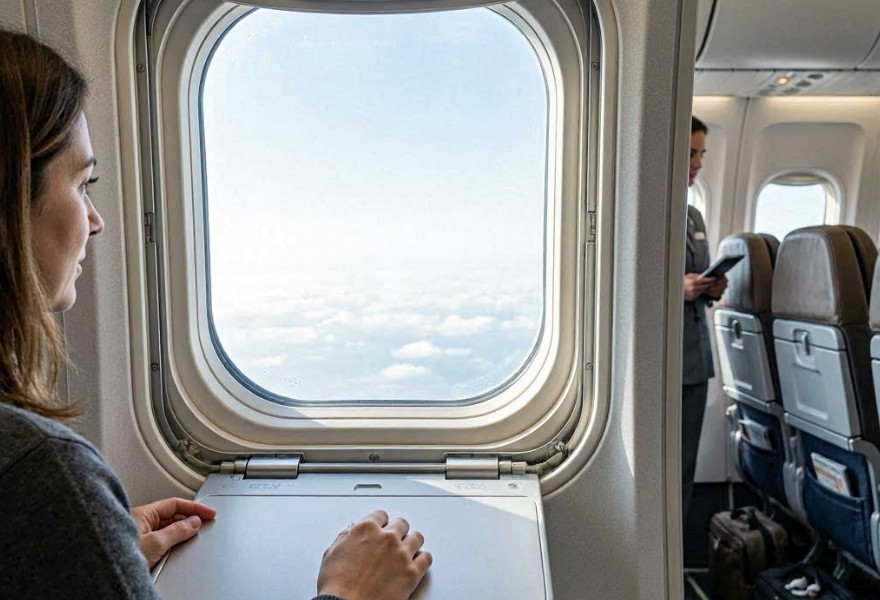
For decades, commercial aviation has followed a familiar architectural blueprint. Passengers board a tube of aluminum, slide into their rows, and look out of small, oval portholes to get a glimpse of the clouds below. While everything from inflight entertainment to jet engines has evolved at a breakneck pace, the physical size of airplane windows has remained stubbornly small. Fighting over the window seat has always been a staple of travel, yet the view itself often felt restricted, requiring passengers to crane their necks just to see the horizon.
Fortunately for aviation enthusiasts and casual travelers alike, the skies are about to open up. A quiet revolution in aerospace engineering, materials science, and cabin design is underway. Next-generation aircraft coming off the assembly lines are featuring significantly larger windows, and future concepts promise to expand our panoramic views of the earth even further. The cramped, claustrophobic cabins of the past are officially giving way to bright, airy, and visually stunning spaces.
The Engineering Challenge: Why Windows Stayed Small for So Long
To understand why airplane windows are only just now getting larger, it is essential to appreciate the immense physical forces acting on a commercial airliner at 35,000 feet.
The Problem of Fuselage Stress
An airplane fuselage is essentially a pressurized vessel. As the aircraft climbs to high altitudes, the air pressure inside the cabin is kept much higher than the thin air outside. This creates a massive outward expansion force, stretching the metal skin of the plane. Every single window cut into this metal skin acts as a structural gap, creating areas of concentrated physical stress.
Following historical aviation accidents in the 1950s, engineers realized that sharp corners and large openings caused metal fatigue to develop rapidly. To ensure absolute structural integrity over thousands of flight cycles, aerospace manufacturers had to keep windows relatively small, thick, and rounded. For over half a century, safety standards dictated that maximizing passenger views had to take a backseat to the limitations of traditional aluminum alloys.
The Composite Material Breakthrough
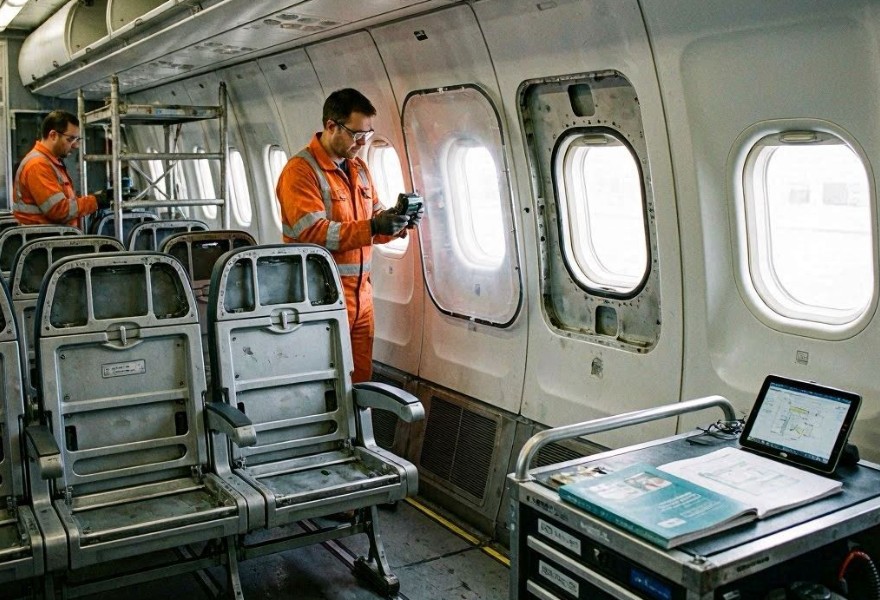
The turning point in the battle for bigger windows came with the introduction of advanced composite materials, specifically carbon-fiber reinforced polymers.
Unlike traditional aluminum, carbon fiber composites are incredibly lightweight, significantly stronger, and far more rigid. When aerospace giants like Boeing designed the 787 Dreamliner, and Airbus followed with the A350, they utilized composite fuselages. Because these carbon-fiber shells can withstand immense pressure differentials without flexing or suffering from metal fatigue, engineers finally had the structural freedom to cut much larger openings into the cabin walls.
The results speak for themselves. The windows on the Boeing 787 are roughly 65% larger than those on legacy aircraft, allowing passengers sitting even in the middle aisle to see the horizon line clearly. This material shift has permanently broken the old engineering boundaries.
Key Benefits of Next-Generation Cabin Windows
The transition to larger window designs offers independent tourists and frequent flyers a variety of tangible benefits that extend far beyond mere aesthetics:
- Reduction in Jet Lag and Motion Sickness: Human biology is deeply tied to natural light cycles. Larger windows allow more natural light to flood the cabin, helping regulate passengers' circadian rhythms. Furthermore, having a clear, expansive view of the natural horizon significantly reduces the sensory mismatch that causes motion sickness.
- Smart Glass Technology: Bigger windows generate more solar heat and glare, which traditional plastic shades struggle to manage. Next-generation aircraft feature electrochromic "smart glass" windows. Passengers can dim the glass electronically through multiple levels of transparency at the touch of a button, blocking heat and glare while keeping the view completely visible.
- An Enhanced Sense of Space: Increased natural light makes even economy cabins feel noticeably wider, less claustrophobic, and more luxurious, completely transforming the psychological experience of long-haul travel.
What the Future Holds: From Large Ovals to Panoramic Walls
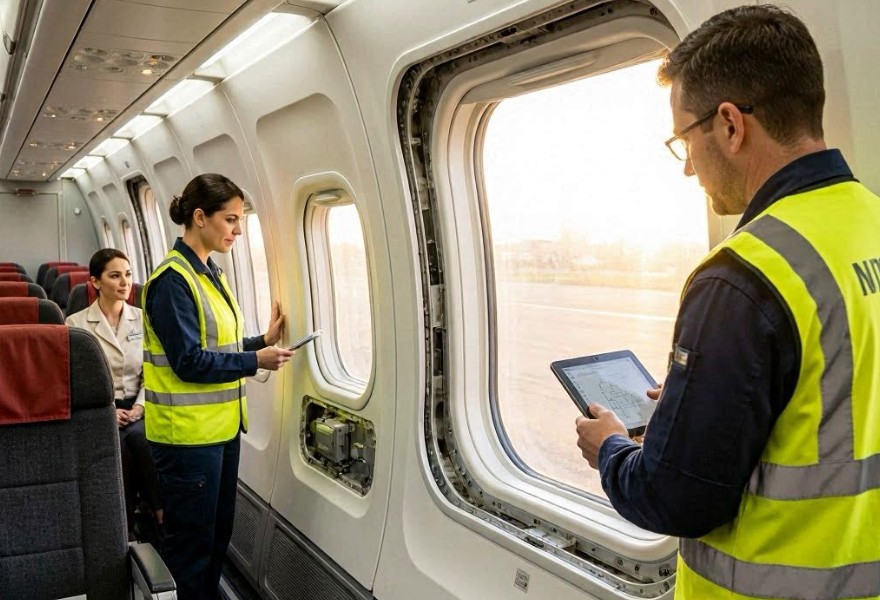
The trend toward larger windows is gaining momentum across the entire aviation industry. The upcoming Boeing 777X features windows that are roughly 16% larger than current competing models, placing them at an ideal eye-level for the average traveler.
The Rise of Premium Panoramic Zones
Looking further ahead, aerospace design firms are conceptualizing "panoramic zones" within commercial aircraft. Instead of individual portholes, future business class cabins or onboard lounge spaces may feature continuous ribbons of reinforced glass. These structural bands will offer unobstructed, sweeping views of the sky, turning the flight itself into the primary destination.
Conclusion
The era of squinting through tiny plastic ports to see the world below is coming to an end. Thanks to the triumph of carbon-fiber composites and smart glass technologies, aerospace manufacturers are successfully safely bringing the outside world into the aircraft. For modern independent travelers, these larger windows mean that flying will recapture its original sense of awe and wonder. The sky is no longer something to be closed off behind a plastic shade—it is about to become a fully immersive panoramic experience.
