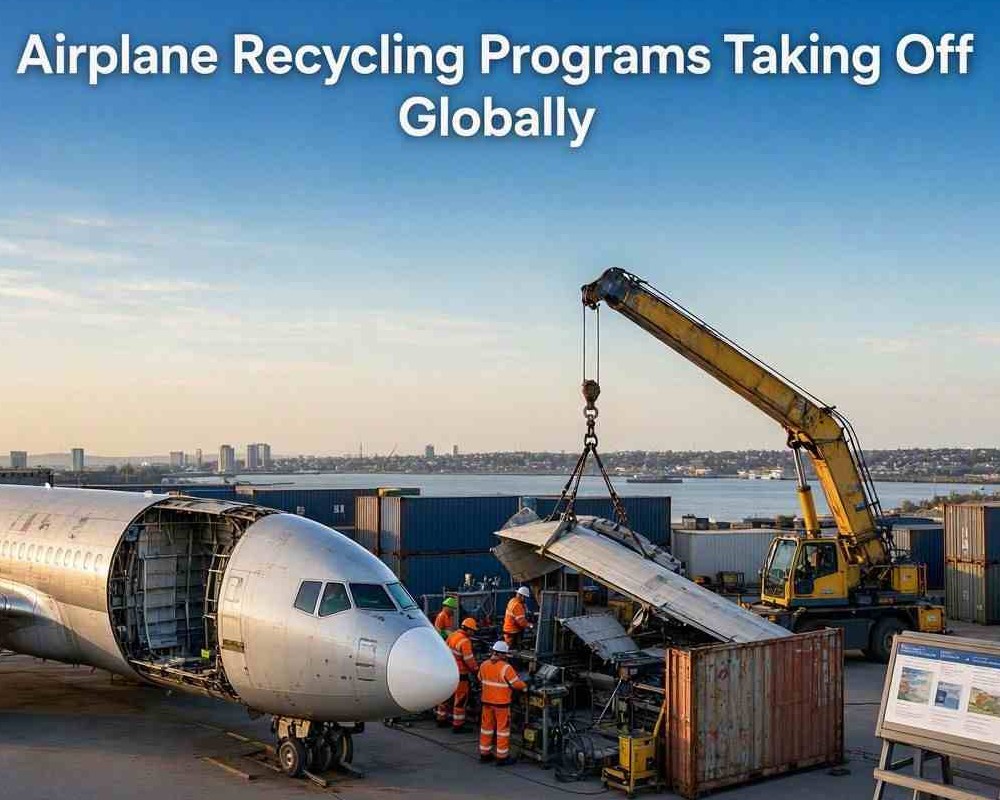
Thousands of commercial aircraft will reach the end of their operating lives over the next two decades. Instead of leaving retired jets in storage yards or sending large sections to landfills, the aviation industry is expanding specialized airplane recycling programs. These initiatives recover valuable components, return metals to manufacturing supply chains, and help airlines reduce the environmental impact of fleet renewal.
Aircraft recycling is becoming a global business supported by airlines, manufacturers, maintenance companies, airports, and material processors. Although dismantling a jet is technically complex, a well-managed program can reuse or recover most of its weight while creating a reliable supply of certified spare parts.
Why Aircraft Recycling Is Expanding
Airlines regularly replace older aircraft with models that consume less fuel and produce fewer emissions. Economic conditions, maintenance costs, noise regulations, and changing passenger demand can also accelerate retirement. As more aircraft leave service, operators need responsible alternatives to long-term storage.
Modern airplanes contain large quantities of aluminum, steel, titanium, copper, and advanced alloys. Engines, landing gear, avionics, cabin equipment, and flight controls may retain significant value. Recycling allows owners to recover part of their investment while reducing demand for newly extracted raw materials.
How an Airplane Recycling Program Works
Aircraft dismantling is a controlled industrial process rather than conventional demolition. Every stage requires technical expertise, accurate documentation, environmental safeguards, and careful handling of components.
Decommissioning and Documentation
The process begins with a review of the aircraft's maintenance history, ownership records, and component status. Technicians drain fuel, hydraulic fluids, oils, and other regulated substances. Batteries, fire-suppression systems, and emergency equipment are removed under established safety procedures. Complete records are essential because reusable parts must remain traceable throughout their service lives.
Recovering Reusable Components
High-value parts are inspected and removed before the airframe is cut. Engines are often the most valuable assets, but auxiliary power units, landing gear, navigation systems, seats, doors, and control surfaces can also be refurbished. Approved maintenance organizations test, repair, and certify eligible components before they return to the aviation market.
Sorting and Processing Materials
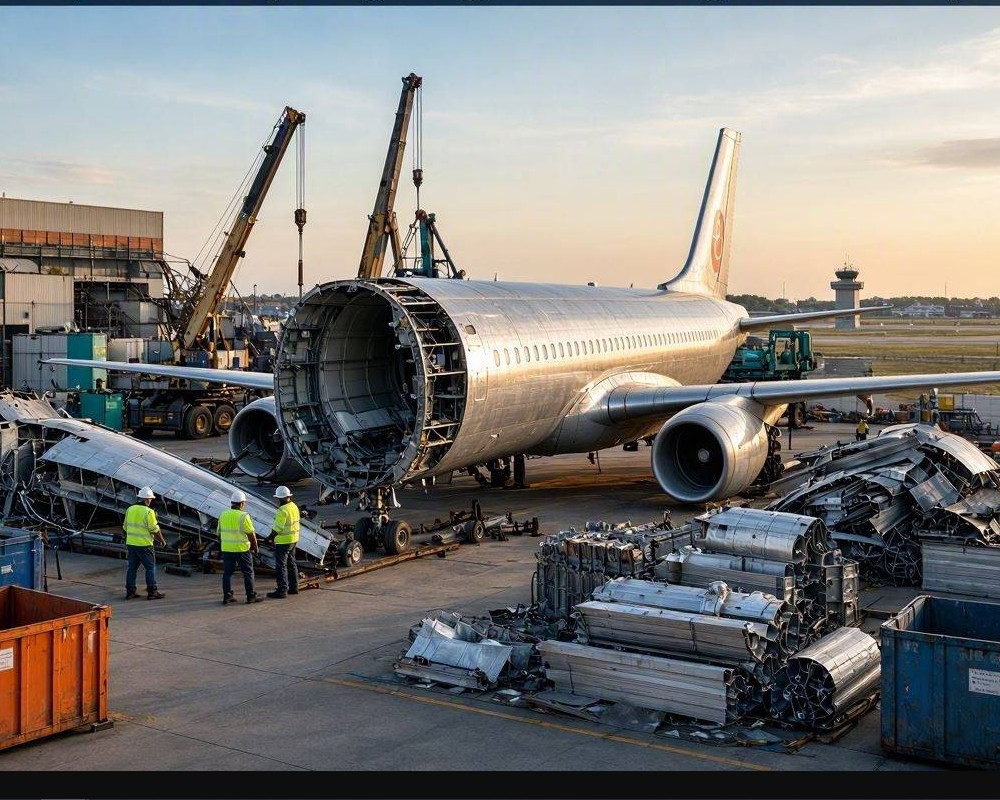
After reusable equipment has been recovered, specialists separate the remaining structure into material streams. Aluminum from fuselage panels can be melted and used in new products. Copper wiring, steel fasteners, and titanium components are processed independently to preserve their value. Plastics, insulation, textiles, carbon-fiber composites, and contaminated materials require more specialized solutions.
Global Growth of Aircraft Recycling
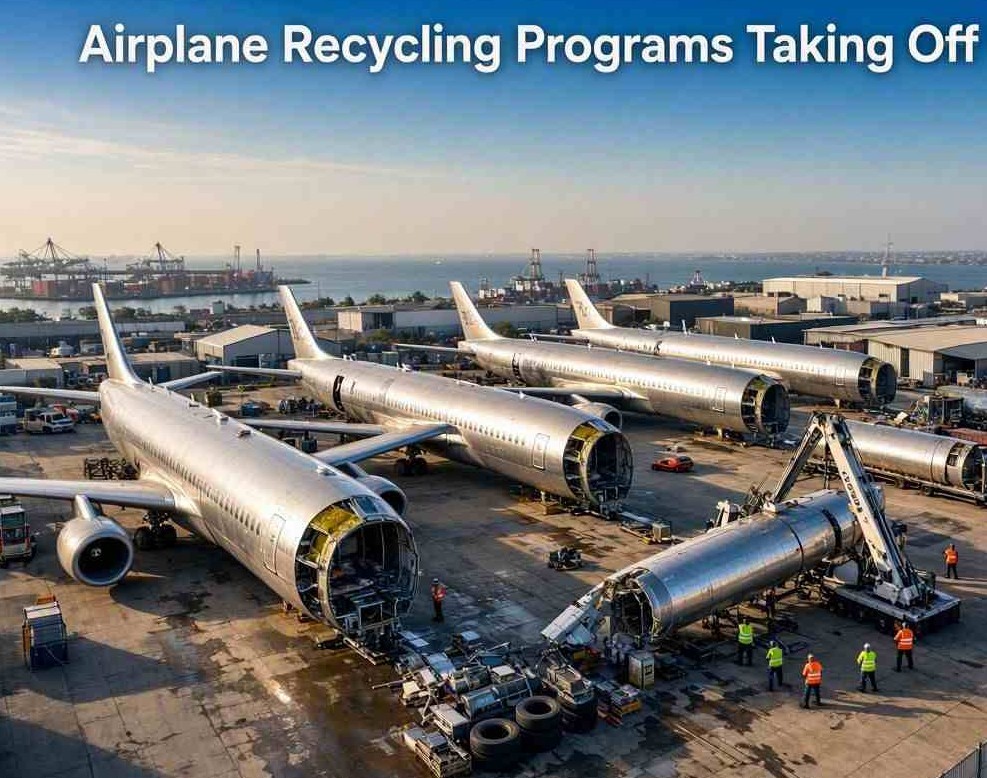
Major dismantling and storage centers operate in North America and Europe, where mature aviation markets provide access to retired fleets and certified repair networks. Programs are also growing in Asia-Pacific, the Middle East, Africa, and Latin America as regional fleets expand and more locally operated aircraft approach retirement.
Industry Standards Improve Consistency
International aviation organizations and industry associations are promoting best practices for dismantling, parts management, worker safety, and environmental protection. Common standards help aircraft owners evaluate recycling providers and reduce the risk of undocumented components entering supply chains. They also encourage recyclers to report recovery rates and final material destinations.
Secondary Markets Support Circular Aviation
Certified used components can lower maintenance costs and extend the useful life of other aircraft. This creates a circular model in which one retired airplane supports multiple active fleets. Recycled metals also have value beyond aviation, including applications in construction, transportation, electronics, and industrial manufacturing.
Key Challenges for Recycling Programs
Despite rapid progress, the sector faces technical and commercial barriers. Aircraft were historically designed for performance and safety, not easy disassembly. Composite materials are especially difficult to separate and reuse at high value. Retired aircraft may also be stored far from suitable dismantling facilities, increasing transportation and logistics costs.
- Composite recycling technologies are not yet available at equal scale in every region.
- Weak documentation can prevent otherwise functional parts from being certified for reuse.
- Market prices for aluminum and other metals affect project profitability.
- Environmental rules and waste classifications vary between countries.
The Future of Airplane Recycling
The next generation of recycling programs will depend on better aircraft design, digital records, and stronger cooperation across the aviation value chain. Manufacturers can make future airplanes easier to disassemble by selecting recyclable materials and planning component access from the design stage. Digital tracking can preserve maintenance data and improve confidence in reused parts.
Research into composite recovery, automated material sorting, and low-energy metal processing will further increase recycling rates. Airlines can support this progress by including end-of-life requirements in purchasing and leasing agreements. As global fleets modernize, responsible dismantling will become an essential part of aviation sustainability rather than a final administrative task. Airplane recycling programs are taking off because they combine environmental benefits with practical economic value.
