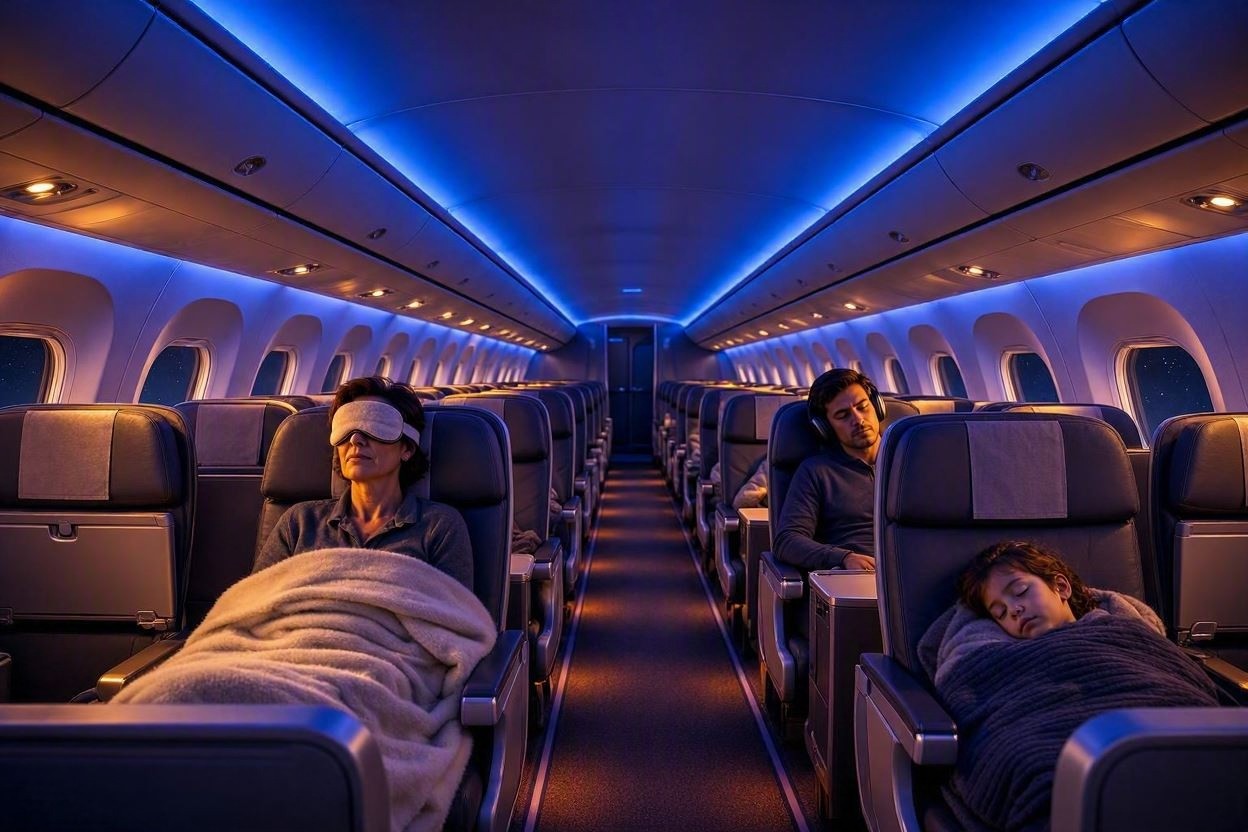
Sleep on an airplane is rarely easy. Cabin noise, limited space, dry air, meal service, and time zone changes all work against the body. Yet one factor is becoming increasingly important in modern aircraft design: light. Airlines and aircraft manufacturers now use carefully planned cabin lighting to help passengers relax, fall asleep sooner, and adjust more smoothly to a new destination.
Airplane lighting designed to help you sleep is not simply dimmed illumination. It is a combination of color temperature, brightness, timing, and placement. On newer long-haul aircraft, lighting systems can simulate sunrise, sunset, evening, and night. The goal is to support the body's natural circadian rhythm, the internal clock that regulates sleep, alertness, hormones, digestion, and mood.
Why Light Matters During Flight
The human body responds strongly to light. Bright, cool-toned light with a blue component tells the brain it is daytime and encourages alertness. Warmer, softer light signals evening and helps prepare the body for rest. This is why looking at a bright phone screen late at night can make sleep more difficult, and why a dim, warm bedroom feels calming.
On an aircraft, the challenge is more complex. Passengers may board in the afternoon, fly through the night, and land in the morning in a completely different time zone. If cabin lighting does not match the desired sleep and wake schedule, travelers can feel more disoriented, tired, and irritable after arrival.
The Role of Melatonin
Melatonin is a hormone that helps regulate sleep. Darkness encourages melatonin production, while bright light can suppress it. Smart cabin lighting aims to reduce unnecessary light exposure during rest periods and provide carefully timed brightness when passengers need to wake up. This approach can make sleep on board more achievable and may reduce the severity of jet lag.
How Modern Aircraft Lighting Works
Traditional aircraft cabins relied on basic fluorescent lighting with limited settings. Modern aircraft use LED systems that can change intensity and color with far greater precision. These systems are lighter, more energy efficient, and more flexible than older technologies.
Color Temperature and Sleep Cues
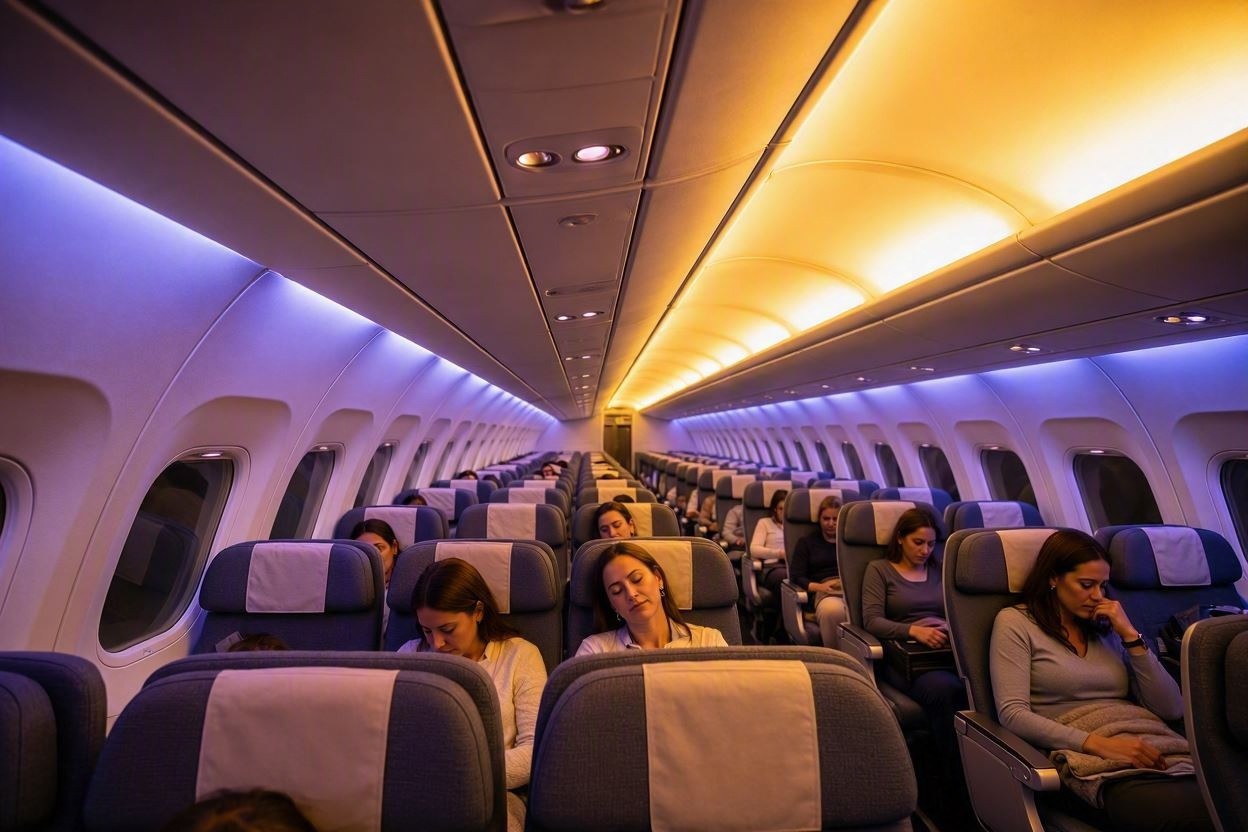
Color temperature is measured in Kelvin. Higher values look cooler and bluish, while lower values appear warmer and more amber. For sleep-friendly lighting, airlines often use warm tones during meal wind-down periods and very low light during scheduled rest. Before landing, lighting may gradually shift brighter and cooler to imitate morning light.
Dynamic Lighting Sequences
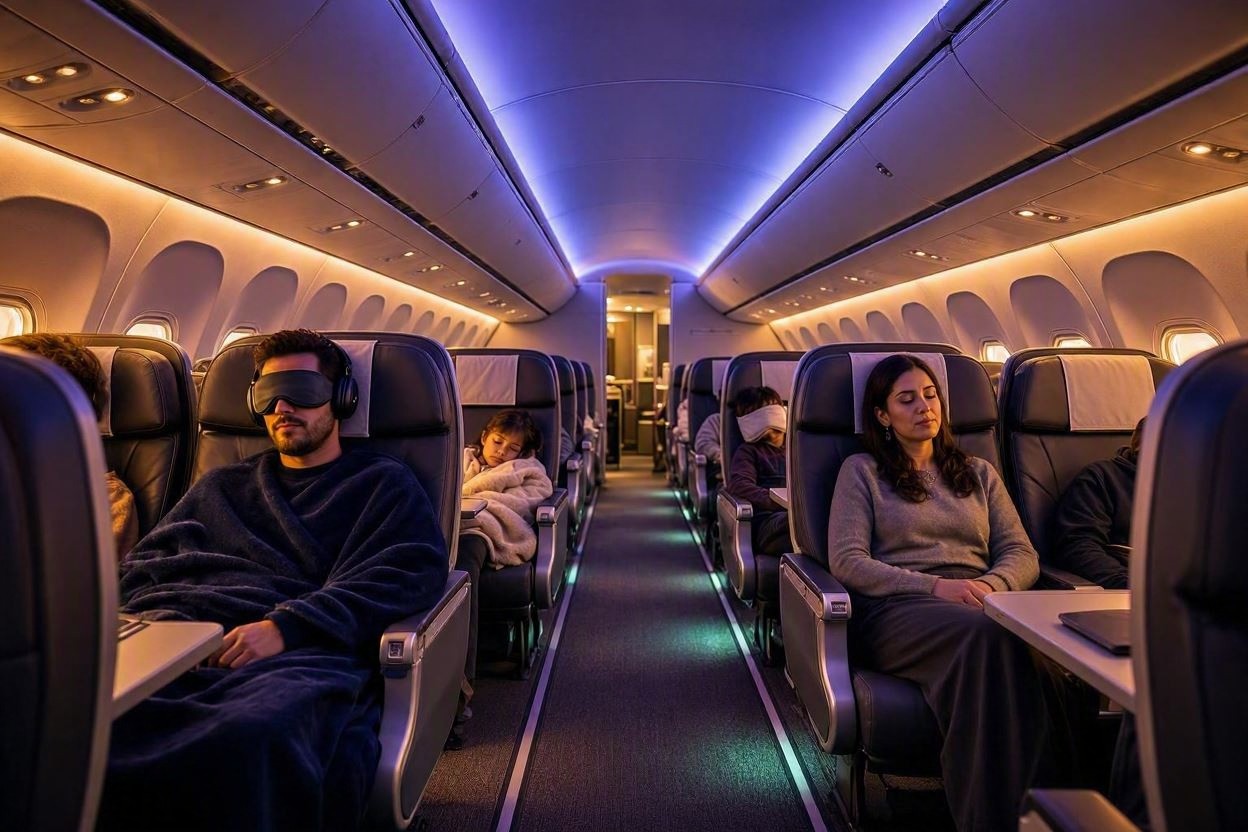
Many long-haul cabins use programmed lighting scenes rather than one fixed setting. A sequence might begin with neutral boarding light, move to warm dinner lighting, fade into a soft amber tone, then transition to deep blue or near darkness for sleep. Before arrival, the cabin may brighten gradually instead of switching on suddenly. This smoother transition is less stressful for the eyes and the nervous system.
Benefits for Passengers
Thoughtful aircraft lighting does not guarantee deep sleep, but it can improve the conditions that make rest possible. For passengers on overnight or ultra-long-haul flights, even small improvements matter. Better rest may lead to clearer thinking, improved mood, and a more comfortable arrival experience.
- Helps the body recognize when it is time to rest
- Reduces harsh light exposure during sleep periods
- Supports gradual waking before landing
- May lessen the effects of jet lag on long-haul routes
- Creates a calmer cabin atmosphere for nervous flyers
Why Airlines Invest in Sleep-Friendly Lighting
Passenger comfort has become a major competitive factor, especially in premium economy, business class, and long-haul economy cabins. Airlines cannot control every part of the sleep experience, but lighting is one area where technology can make a visible difference. A cabin that feels calm and well timed can influence how travelers remember the flight.
There are also operational advantages. LED systems consume less power and last longer than older lighting, reducing maintenance needs. Because the same hardware can create many lighting scenes, airlines can customize the atmosphere for boarding, dining, sleep, and arrival without major physical changes to the cabin.
Aircraft Designed Around Passenger Biology
Newer aircraft such as the Boeing 787 and Airbus A350 are often associated with improved passenger comfort. Along with better humidity, quieter engines, and larger windows, advanced lighting plays a role in creating a less exhausting flight. The best cabin environments consider biology, not just aesthetics.
What Passengers Can Do to Support Better Sleep
Cabin lighting helps, but personal habits still matter. Travelers can improve their chances of sleeping by working with the aircraft's environment rather than against it. Simple choices before and during the flight can make the lighting strategy more effective.
- Set your watch or phone to the destination time after boarding.
- Dim personal screens and use night mode when the cabin lights are low.
- Avoid strong caffeine close to the planned sleep period.
- Use an eye mask if nearby reading lights or screens disturb you.
- Choose warm, low-intensity reading light when possible.
- Follow the cabin's sleep and wake rhythm, especially on overnight flights.
Limitations of Airplane Sleep Lighting
Lighting is powerful, but it cannot overcome every barrier to sleep. Seat comfort, passenger movement, announcements, turbulence, and anxiety can still interrupt rest. Individual biology also varies. Some travelers are highly sensitive to blue light, while others can sleep almost anywhere. For maximum benefit, sleep-friendly lighting should be combined with quieter cabins, comfortable seating, good temperature control, and thoughtful service timing.
Economy vs Premium Cabins
Advanced lighting usually benefits the entire aircraft, but the sleep experience can still differ by cabin. Premium seats may offer more privacy and fewer disturbances, while economy passengers may need extra tools such as earplugs, neck pillows, and eye masks. Even so, a well-designed lighting program can improve comfort across all seating classes.
The Future of In-Flight Sleep Design
The next generation of airplane lighting may become even more personalized. Future systems could adjust by route, departure time, season, and destination time zone. Some cabins may eventually coordinate lighting with entertainment screens, window dimming, and meal service to create a more complete circadian plan.
Airplane lighting designed to help you sleep is a practical example of human-centered travel technology. It recognizes that passengers are not simply being transported from one airport to another. They are crossing time zones inside a controlled environment where light can either confuse the body or guide it. When used intelligently, cabin lighting turns a long flight into a more restful, less disruptive experience.
